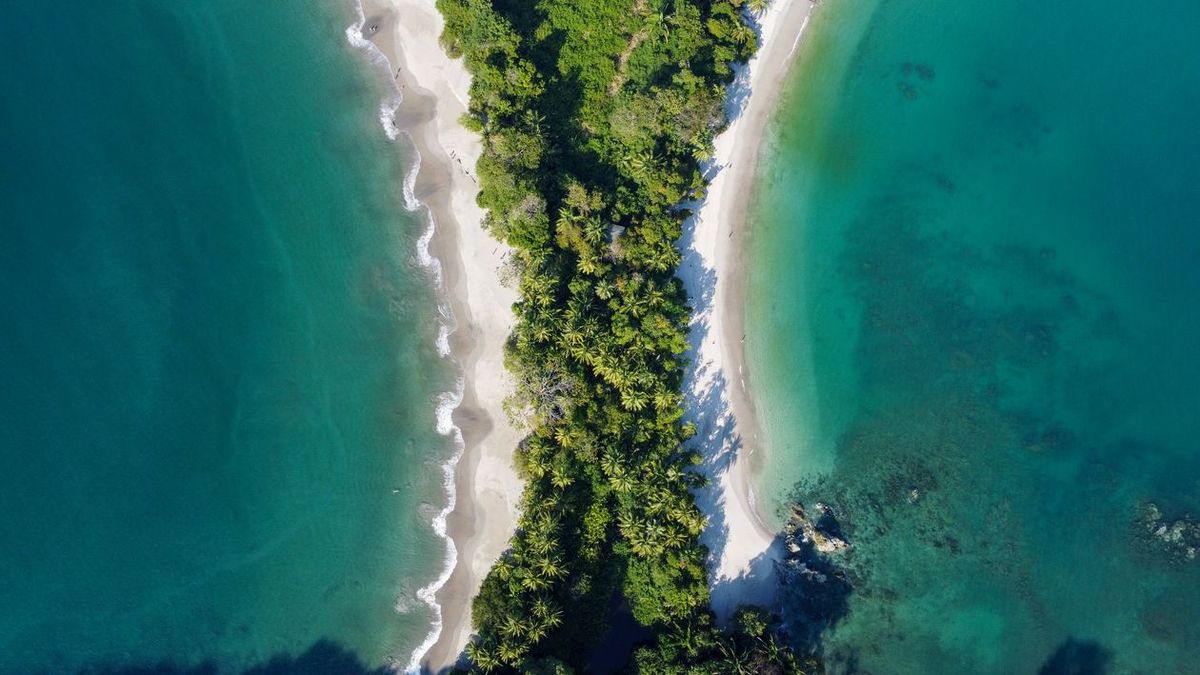
Not every beautiful beach is swimmable
Costa Rica's Pacific coast has some of the most beautiful beaches you'll ever see — and some of the most dangerous surf in the tropics. The same swell that brings surfers in from all over the world creates rip currents that drown strong swimmers every single year.
This isn't a scare tactic. It's the honest framing nobody puts on the postcard: the prettiest beach on your itinerary might be a look-don't-swim beach, and that's completely normal here. People ask me about swimming at Sámara, Playa Carrillo, Playa Carmen — and the answer is always the same: it depends on the day, the swell, and the spot. The trick is knowing how to read it before you get in.
How to read a beach in two minutes
Before anyone gets in the water, do a two-minute read. Look for river mouths — where brown river water meets the ocean, the current runs stronger and the water is murkier. Look for waves breaking far out with a calm-looking channel between them: that calm gap is often the rip itself, pulling water back out to sea.
Then look at the people. Are locals swimming, or just surfing? If the Ticos are staying on the sand and only the surfers are out past the break, that's your answer. Locals read these beaches the way you read a weather forecast — follow their lead, not the Instagram photos.
And check for lifeguards — but don't count on finding one. Most Costa Rican beaches have no lifeguard at all; a handful of popular ones run seasonal programs. Assume you're on your own and swim accordingly: closer to shore, within your depth, with a buddy.
Caught in a rip: what actually works
A rip current doesn't pull you under — it pulls you out. The panic is what kills, because the instinct is to swim straight back to shore against it, and you will lose that fight no matter how strong a swimmer you are.
What works: don't fight it. Float, stay calm, and swim parallel to the shoreline until you're out of the narrow channel — then swim back in at an angle, away from the rip. If you're too tired to swim, float and signal for help. Rips usually release you once you're past the breakers.
The rules that keep you alive
Three rules, no exceptions: never swim alone, never swim at dusk or at night, and never swim after drinking. Almost every drowning story here checks at least two of those boxes. The ocean at dusk is a different animal — visibility drops, currents shift, and nobody can see you if something goes wrong.
Watch the shorebreak too. On steep Pacific beaches, the wave can slam you into the sand before you ever reach deep water — enter where the slope is gentle, and never turn your back on an incoming set while you're wading in. If you're unsure about a beach, waist-deep and happy beats a rescue story every time.
Kids at the beach: non-negotiables
Kids don't get the benefit of the doubt near this ocean. An adult stays within arm's reach of any child under 8 in the water — not "watching from the towel," in the water. Waves that knock an adult sideways will take a small child clean off their feet.
Pick your beach for the kids, not the photos. Calm, sheltered coves and the beaches locals point you to beat dramatic surf beaches every time for a family swim day. And the dusk rule doubles for kids: everyone out of the water well before sunset, no negotiations.
Questions people ask
Are there lifeguards on Costa Rica's beaches?
Mostly no. A few popular beaches run seasonal lifeguard programs, but the vast majority of the coastline has no lifeguard at all. Swim like you're on your own — because you are.
How do I know if a specific beach is safe for swimming?
I won't call a beach safe sight-unseen — conditions change with swell, tide, and season. Ask locals the day you go: hotel staff, surf shops, fishermen. If the locals aren't swimming, you shouldn't be either.
Is the Caribbean side safer than the Pacific?
Generally calmer, yes — but it has its own hazards: reef cuts, undertow, and the same absent-lifeguard reality. The same rules apply: swim where locals swim, never alone, never at dusk.